
Lea Bridge Station Gallery 1: c1897 - c1907 bridge_old9.jpg) Looking north-west towards Lea Bridge station c1897. Lea Bridge is believed to be the first station in the UK to have it's main building on a bridge straddling the tracks. Note the unusually tall signal
There was only one reason for signals being mounted on posts that tall - sighting from a distance when drivers' view was obstructed. This particular signal applied to trains approaching from the Stratford direction, ie from behind the camera, but quite what would have obstructed drivers' view to warrant such a tall post is not known. The locomotive on the left is too indistinct to make out any details other than it's a small tank locomotive with semi-open cab. The sidings on the right served the . Lea Bridge Gasworks. 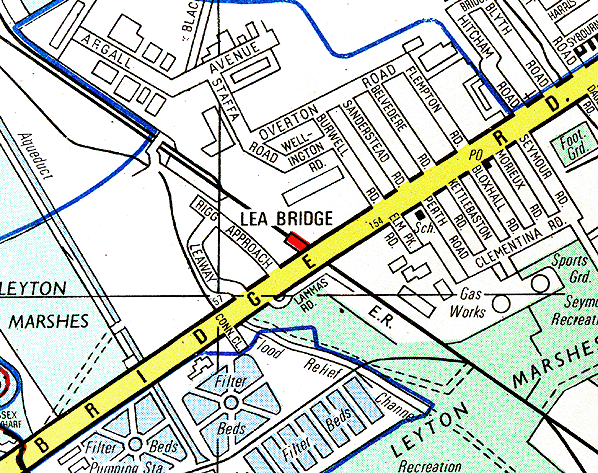 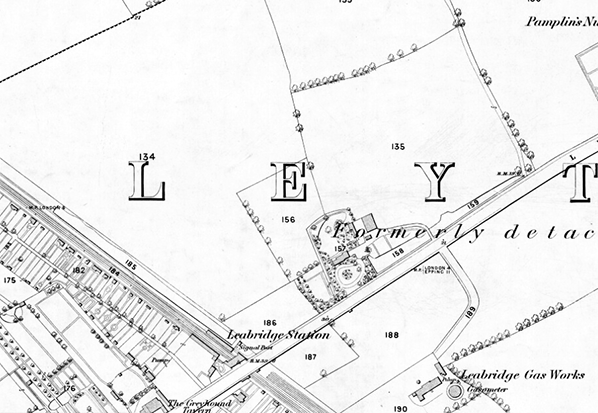 1870 1:2,500 OS Map. Although the station was still know as Lea Bridge Road at this time. Ordnance Survey have used the name 'Leabridge', a name that was never used. It is not unusual for Ordnance Survey to substitute their own spelling for the correct spelling. A residential estate has built up to the south west of the station but in other directions the station is surrounded by open countryside. Note the stagger in the platform buildings, matching the angle of the road in relation to the track. At this time the station had no goods facilities and no sidings. The Lea Bridge Gas Works, which opened in 1853, is seen to the south of the road bridge on the east side.
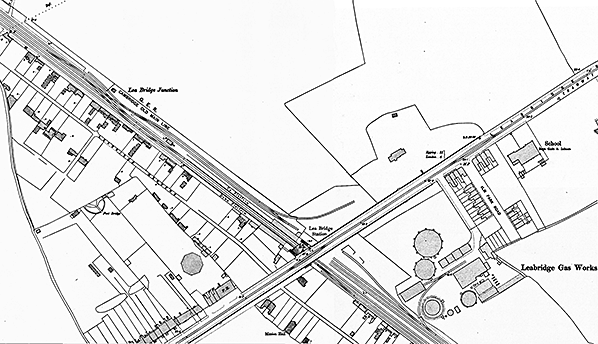 1893 1:1056 OS Town Plan. The station has now been provided with a single siding and a loop on the up side and the station now handled basic goods traffic. Access to the siding is controlled by a new signal box at Lea Bridge Junction. To the south of the road the gas works has expanded; it is still incorrectly shown as Leabridge Gas Works but the station name has been corrected and is now Lea Bridge. 1893 1:1056 OS Town Plan. The station has now been provided with a single siding and a loop on the up side and the station now handled basic goods traffic. Access to the siding is controlled by a new signal box at Lea Bridge Junction. To the south of the road the gas works has expanded; it is still incorrectly shown as Leabridge Gas Works but the station name has been corrected and is now Lea Bridge.Click here for a larger version 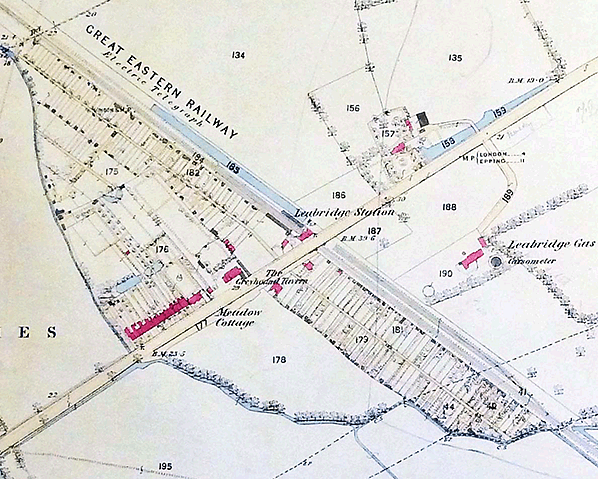 1896 1:2,500 OS Map. There is little chang from the earlier Town Plan, both would have been produced from the same survey. A bungalow ‘shanty town’ grew up in the 1870s around Lea Bridge Station, at fringes of the expanding urban area of Leyton. The settlement consisted of perhaps 69 wooden houses or shacks with wells and earth closets. Click here for a larger version,
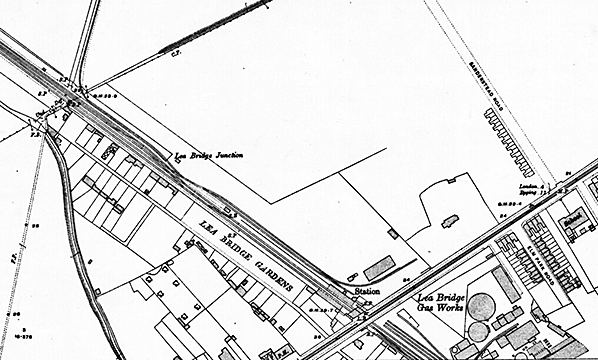 1913 1:2,500 OS Map. A building is now shown adjacent to the siding. This is the GER's telegraph works which opened in 1898. The smaller building to the south-west may be the 'dummy' signal box which is said to have been built on the site. The the north-west of the station on the up side a trailing siding ruins north to serve the Walthamstow Urban District Council Sewage Works in Forster Road. To the south of the station some of the timber housing in Lea Bridge Gardens has been demolished to make way for a public park, also known as Lea Bridge Gardens. There has been some residential development to the east of the railway.
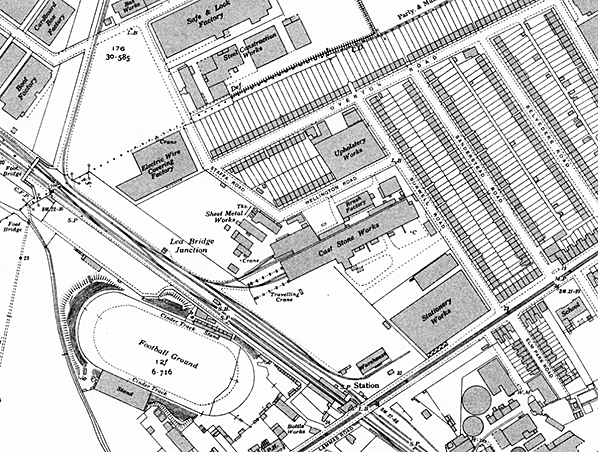 1939 1:2,500 OS Map. New industries have developed to the north of the station, in particular a cast stone works with four sidings going into the works. To the south of the station Lee Bridge Gardens have been cleared away to make way for Lea Bridge Stadium. The stadium was originally a speedway venue, but also started hosting football matches in 1930 when Clapton Orient moved to the site. There has been substantial residential development to the north-east of the station. Click here for a larger version.
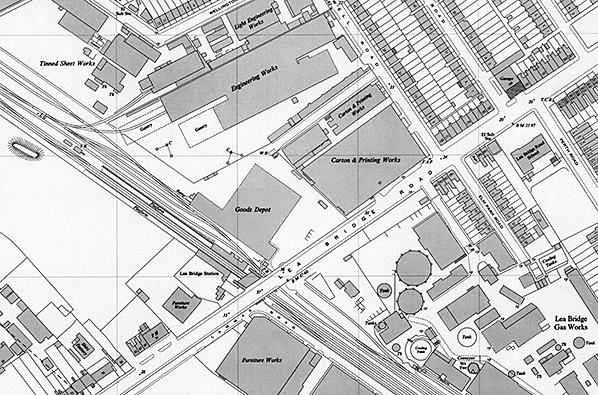 1955 1:2,500 OS Map. Lea Bridge Stadium was short lived and closed at the end of the 1938 season and by 1955 had been largely demolished with the exception of the main stand (out of view to the left) Substantial new industries have developed to the north of the station but most are not rail connected. The cast stone works is now shown as an engineering works with some expansion of the buildings. Power and Dean Ransomes Ltd. (Part of H Young & Co) took over the site in 1943 after their steel fabrication works at Nine Elms was destroyed in a German air raid. The old GER telegraph works was demolished in 1939 and a large goods depot built on an extended site. This is connected to the street level station building by a high level staff walkway (FB). Click here for a larger version.
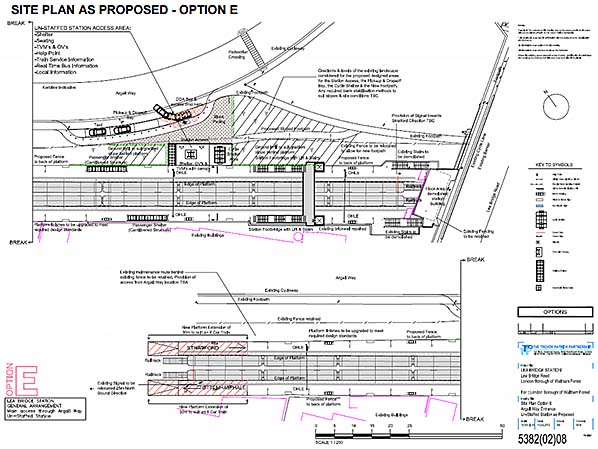 Five options for reopening the station were proposed with a 6th for later upgrading to a staffed station. Option E, the council's preferred option is shown here. This option was eventually adopted.
Click here for a larger version. bridge_old1.jpg) Lea Bridge Station looking south-east from the up platform c1907. The platform buildings comprised open-fronted brick shelters with plain canopies supported on 11 thin cast iron columns. Copyright photo from John Alsop collection Click here for Lea Bridge Station Gallery 2: 1933 - July 1975
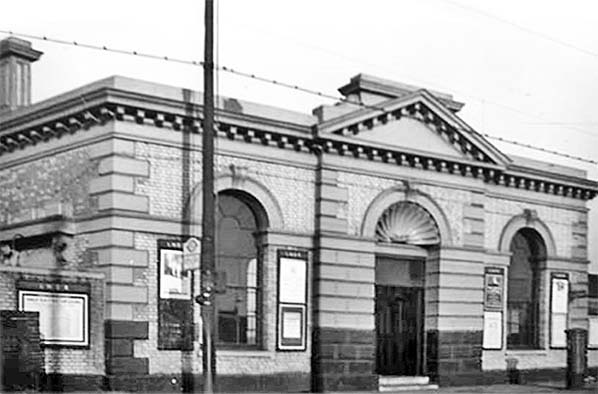
The attractive Italianate street level building is seen in 1940. The building was designed by Sancton Wood and featured a bell turret on the roof with a bell that was rung when a train was due.
Photo from John Mann collection bridge_aerial_old6.jpg) Aerial view of Lea Bridge station from the south in April 1947. The street level building was gutted by fire on 31 March 1944 and is seen here as a blackened shell. The staggered platform shelters are seen, the angle of the stagger matching the angle of the road in relation to the line. Lea Bridge signal box and junction is seen north of the up platform. Bottom right is the recently built goods and parcel depot which was built partially on the site of the disused GER telegraph works. Note the high level staff walkway linking the depot with the street level station building. North of the goods depot is H Young & Co's steel fabrication works which moved onto the site of the cast stone works in 1939 following an air raid which destroyed H Young's works at Nine Elms. The works are served by four sidings from Lea Bridge Junction. The sign on the side of the building says Powers and Deane Ransome's Co. Lea Bridge Steelworks. E10. One the left of of the stands of the abandoned Lea Bridge Stadium is seen. Part of the stationmaster's house is seen bottom left next to the station building. Click here for a larger version
Reproduced with the kind permission of Simmons Aerofilms Ltd bridge_aerial_old12.jpg) Aerial view of Lea Bridge station from the east in April 1947. Lea Bridge Road runs along the left edge with the burnt out and blackened shell of the station building clearly visible. The recently constructed good/parcels depot is seen to the east of the station. Despite a number of vans in the sidings the yard is devoid of any activity with no vehicles visible. To the right the steel yard appears to be well stocked. The remains of Lea Bridge Stadium are seen at the top, the two stands are still there but the terracing a and track have been removed to allow the site to be used as allotments as part of the war effort. Further allotments are seen on railway land to the north of Lea Bridge Junction' There are some interesting buses on Lea Bridge Road. (Click here to see a larger version) Towards the bottom of the picture and heading east is a trolleybus. Between the trolleybus and the station, also heading east, is an LT class double-decker. Heading west and about to pass the station is an open staircase bus, either of the LT or ST class. It appears to be an ST. In 1947 the LT and ST classes only had a couple of years left before they were replaced by the RT types. The surviving open staircase buses had enjoyed an extended life due to the war.
Reproduced with the kind permission of Simmons Aerofilms Ltd bridge_old8.jpg) Lea Bridge station looking south from the down platform in 1952. The electric lamp posts are all displaying a British Railways Eastern Region totem sign. The final specification for totem signs was agreed in late 1949, allowing the first totems to be made and hung in 1950. Most stations did not receive totems as early as 1952. The long goods dock is seen on the left as is the raised walkway from the upper level of the depot to the street level building.
Photo received from Dave Brennand bridge_aerial_old14.jpg) An aerial view of Lea Bridge station seen from the north in June 1952. The street level building has been repaired and now has a new roof. A trolleybus is seen approaching the station along Lea Bridge Road. At this time trolleybuses running along Lea Bridge Road were 555 Woodford (Sundays only) - Leyton Green - Bloomsbury. 557 Chingford Mount - Liverpool Street station. 581 Woodford (Napier Arms) - Bloomsbury. Two British Railways delivery vans, both in carmine and cream livery, are also seen in Lea Bridge Road. The stationmaster's house is seen to the right of the station with more railway land around it being used as allotments for the war effort. A line of vans stand at the goods depot loading dock and a line of road delivery vans are seen to the left. Lea Bridge Gas Works is seen top left.
Click here for a larger version. Reproduced with the kind permission of Simmons Aerofilms Ltd bridge_aerial_old7.jpg) An aerial view of Lea Bridge station seen from the west in June 1952. Powers and Deane Ransome's Co. Lea Bridge Steelworks and next to it the BR goods and parcels depot are seen to the east of the station. None of the other industries seen in this view are rail connected. Click here for a larger version.
Reproduced with the kind permission of Simmons Aerofilms Ltd
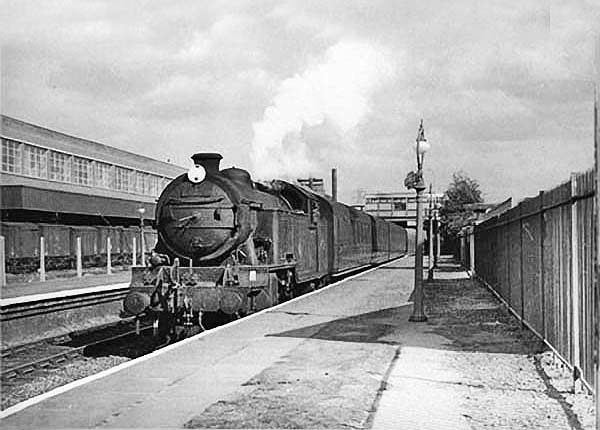 L1. No.67729 is seen in the down platform at Lea Bridge station circa late 1950s. 67729 was a Stratford machine for almost all its life. It's working a local service but it's destination could be anywhere; Broxbourne; Hertford; Bishop's Stortford; Cambridge.
Photo from Jim Lake collection bridge_old4.jpg)
Lea Bridge station looking south from the down platform ion September 1963. Although repaired and re-roofed after fire damage during the war the attractive street level building has now been demolished and replaced with a very plain prefabricated concrete structure. The up platform shelter has also been demolished and replaced with a concrete bus shelter. A line of vans is seen in the goods dock to the east of the station.
Copyright photo from Stations UK 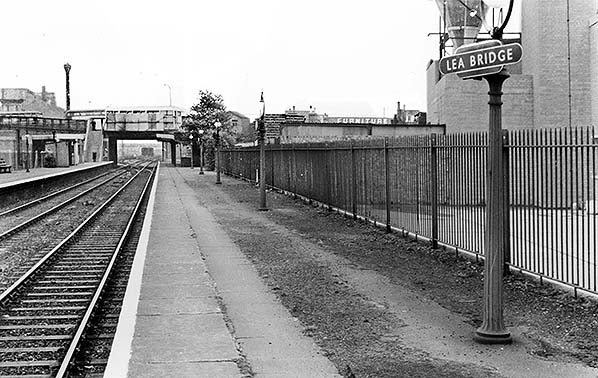 Lea Bridge station looking south along the down platform circa early 1960s. A half flanged totem sign is fitted to each of the LNER ‘mint imperial’' style electric lamp posts which were still in place at this time.
Photo from John Mann collection bridge_old2.jpg) Leigh Bridge station looking south from the up platform in July 1975. The 'new' street level building is already looking very shabby by this time as is the bus shelter on the platform. The following year the station would become unstaffed. The only thing that is attractive about the station now are the LNER lamp standards with 'mint imperial; shades.
Photo by Alan Young
bridge_old1.jpg) Lea Bridge Station looking south-east in July 1975. Although Lea Bridge officially closed to goods traffic on 7 December 1970 it was retained as a parcels depot and vans are still seen at the dock in this 1975 view. The final closure date is not known but is assumed to be 1970s. Photo by Alan Young bridge_old11.jpg) While to up platform shelter was demolished in the 1960s the down shelter was retained and as seen in July 1975 largely unaltered from GER days apart from the addition of a valance on the canopy. The sign on the bridge abutment says 'Cross the line by the footbridge only'.
Photo by Alan Young 110.jpg) Looking south from the up platform in February 1984. The down platform shelter has now been demolished with only the back wall remaining. The bus shelter on the up platform has also been removed; the only shelter now is at street level. The blue totem signs have been replaced by white BR corporate identity although the blue running in boards remain. The sign inviting people to cross the track by the footbridge has been removed.
Photo by Alan Young 112.jpg) Lea Bridge up platform seen from the north end of the down platform in February 1984. The parcels depot closed in the latter half of the 1970s and after less then ten years of disuse is already suffering bad vandalism with most of the windows on the upper floor broken. With the station now unstaffed access to the depot from the platform was easy. The high level bridge from the station building is still in place although presumably access along it was blocked.
Photo by Alan Young 109.jpg)
Looking north from the footbridge as a Cravens Class 105 DMU pulls into the up platform with a Stratford service. A sole passenger waits to board the train - that's one more than usual. It its final years on a Saturday it was not uncommon for a train crew on a shift with four shuttle services between Tottenham Hale and Stratford not to carry a single passenger.
Photo by Alan Young bridge101.jpg) A Brush Type 4 or Class 47 diesel is seen running light through the down platform at Lea Green in 1984. All is not what it seems however as the loco is not showing a headlamp at the near end so must be running 'wrong line' or in the process of reversing. There was a (apparently well used) crossover just behind the locomotive.
Photo by Brian Gronland bridge102.jpg) Looking north from Lea Green station footbridge in 1984. The industrial units on the left stand on the site of the Lea Bridge Stadium, part of which survived into the 1974.
Photo by Brian Gronland bridge103.jpg) Although BR Eastern Region blue totem signs were removed in the latter half of the 1970s, the running-in boards and other blue signage survived until 1984, the year of this photo. This sign directs people to the down platform although by this time passengers want to travel to Broxbourne or Hertford East would need to change at Tottenham Hale.
Photo by Brian Gronland bridge108.jpg) bridge81.jpg) Lea Bridge up platform and the derelict parcels depot seen from the overgrown north end of the down platform in November 1984. The gantry is in Powers and Deane Ransome's Co. Lea Bridge Steelworks which remained at Lea Bridge until 1995.
Photo by Nick Catford bridge83.jpg) The utilitarian structure that replaced the original road level entrance building is little more than an open shelter. The bridge to the former parcels depot part way across. (November 1984).
Photo by Nick Catford bridge109.jpg) bridge75.JPG) In its last few years a two car shuttle between Stratford and Tottenham Hale was the only service serving Lea Bridge station. On this occasion in 1984 two passengers have left the train.
Photo from Jim Lake collection Click here for Lea Bridge Station Gallery 4: bridge76.jpg) As there was no weekend service the final day of operation was Friday 5 July 1985. Throughout the day the usual shuttle service fitted with a special headboard operated between Tottenham Hale and Stratford. This view is taken earlier in the day before the crowds gathered for the last train.
Photo by Richard Allen from his Flickr photostream bridge54.jpg) On the last day, a local acoustic punk-folk band Aunt Fortescue's Bluesrockers fronted by Graham Larkbey campaigner for improved railway services, played a gig at the station. They had previously played 'on train' gigs to highlight the station’s plight and bad service and forthcoming closure.
Photo by Steve Barry bridge45.jpg) 39.jpg)
The Cravens Class 105 DMU which provided the service on the last day had been painted in a non-standard livery for an open day at Stratford depot. Stratford often applied its own version of the BR livery, especially on locomotives
Photo by A.F.Grimmett
bridge74.jpg) Crowds have gathered at Lea Bridge in time for the last shuttle service in the evening. The two car set was made up of cars 54122 and 53359. The last Class 105s were withdrawn from service at Norwich depot in 1988. Only three cars have survived into preservation due to the use of asbestos
in their construction. Photo from Kim Rennie's Flickr photostream bridge53.jpg) It has been a long time since Lea Bridge last saw this many passengers on the platform.
Photo by Steve Barry 115.jpg)
The sky is darkening as driver Dave Newell sits in his cabin ready to take the last train back to Stratford. It eventually left Lea Bridge in the middle of a violent thunderstorm.
Photo by Richard Allen from his Flickr photostream 114.jpg) bridge104.jpg) Apart from the removal of the Corporate Identity signage on the lamp posts little has changed in January 1986, 18 months after closure.
The street level surface building which is in reality no more than an open shelter and covered footbridge is seen in in January 1986, 18 months after closure.
Photo
by Nick Catford
bridge107.jpg)
View north from the footbridge at Lea Bridge in January 1986. The parcels depot on the right is getting more dilapidated It was eventually demolished in the 1990s to make way for the Leyton Relief Road (Argall Way/Orient Way).
Photo by Nick Catford bridge108.jpg) Looking south towards Lea Bridge station in January 1986, 18 months after closure. Photo by Nick Catford Click here for Lea Bridge Station Gallery 5: bridge90.jpg) By January 2008 vegetation is taking over not only the platforms but the footbridge as well. The line through Lea Bridge was electrified to accommodate the service to Stansted Airport
which started in 2005. Photo
by Nick Catford
bridge91.jpg) Looking north from the footbridge in January 2008. The Leyton Relief Road (Argall Way) is seen on the right. The derelict parcels depot and the steel works were demolished in the 1990s to make
way for this road. Photo by Nick Catford bridge96.jpg) Looking south at Lea Bridge station in July 2008. The buildings on the right are on the site of one of the stands of the Lea Bridge Stadium.
Photo by Nick Catford bridge97.jpg) Looking south for the down platform at Lea Bridge station in January 2008. The back wall of the platform shelter is seen on the right.
Photo by Nick Catford bridge89.jpg) Compare this January 2008 view of the street level shelter with that taken in January 1986 from a similar view point. The building has provided shelter for a number of homeless people although nobody was in residence during my visit.
Photo
by Nick Catford
bridge100.jpg)
Lea Bridge station looking north in January 2008.
Photo by Nick Catford bridge117.jpg) In March 2015 work has yet to start on building the new Lea Bridge station although the street level shelter has been demolished. A Yeoman MRL train is passing Lea Bridge station en route from Harlow Mill to Acton Yard. Mendip rail empty stone wagons are regularly seen on this line. Objections raised by three freight operators who use the line delayed work starting on the new station by two years.
Photo by FP Ormerod from his Flickr photostream bridge41.jpg) Three months later in June 2015 work is underway clearing the site prior to building the new station. The abandoned freight link between Temple Mills and Lea Bridge sidings is seen in the foreground
Photo by FP Ormerod from his Flickr photostream bridge42.jpg) Looking north from Lea Bridge Road in June 2015. The new station entrance will be in the fenced off area on the right.
Photo by FP Ormerod from his Flickr photostream bridge43.jpg) Site clearance is underway at Lea Bridge station in June 2015. The original stairs to the up platform has been demolished in the foreground. Those to the down platform are still in place at this time.
Photo
by FP Ormerod from his Flickr photostream
bridge116.jpg) The new station entrance and concourse in January 2016. The original platforms have been retained but resurfaced and shortened. Photo by FP Ormerod from his Flickr photostream bridge55.jpg) Looking north along the up platform during the evening of 15 May 2015. The station is now open with tickets being sold but the first train has yet to stop. It is indicated on the display and is the 20.14 from Tottenham Hale, due at Lea Bridge at 20.18. Photo by Nick Catford bridge56.jpg) Looking south along the up platform during the evening of 15 May 2015 before the arrival of the first train to Stratford. The new footbridge complete with lifts is seen in the distance. Photo by Nick Catford bridge77.jpg) Although scheduled as the second train and due to arrive at Lea Bridge at 20.21, recovery time meant the Class 317/6 actually arrived before the 'official' first train; hence the large crowd of people waiting on platform 1. Luckily Richard Allen was on the wrong platform at the right time and got an unobscured view of the first arrival.
Photo by Richard Allen from his Flickr photostream bridge78.jpg) As the second train stands in platform 2 the first train is seen approaching platform 1 on time on
15 May 2016/ Photo by Richard Allen from his Flickr photostream bridge58.jpg)
Crowds greet the 'official' first train as it arrives at Lea Bridge station. In December 2015 Abellio Greater Anglia completed an upgrade of its fleet of 24 Class 317/6 EMUs that operate Cambridge to Liverpool Street and Cheshunt / Hertford East to Liverpool Street services and now the Lea Bridge service. The trains received an interior refresh and upgrade to improve passenger comfort. The upgrade programme saw 96 carriages in total improved with new seat covers and vinyl flooring, new First Class seat covers and trim and carpets renewed, interiors re-sprayed (including grab handles and luggage racks) and new signage applied.
Photo by Nick Catford bridge60.jpg) One of the passengers on the first train was local musician and railway campaigner Graham Larkbey who had played gigs at the station and on the last train in July 1985.
Photo by Nick Catford bridge62.jpg) Crowds wait for the official opening of Lea Bridge station on 16 May 2016. The 09.33 to Stratford waits at platform 1. The VIP guests will be on the next train, arriving from Tottenham Hale at 10.01
Photo
by Nick Catford
bridge63.jpg) With the party in full swing a jazz band entertain the waiting crowd with children from the nearby Sybourn Primary School joining in with 'When the saints go marching in'
Photo by Nick Catford bridge64.jpg) Also back to entertain the crowds were Aunt Fortescue's Bluesrockers, specially reformed for the occasion. Once again frontman Graham Larkbey is in full swing leading the children from Sybourn School in his rendition of the laughing song 'The Wild Rover' sung to the tune of Charles Penrose's 'Laughing Policeman'
Photo by Nick Catford bridge65.jpg) bridge68.jpg)
There were a number of speeches during the opening ceremony.Rail Minister Claire Perry MP told the crowd “Lea Bridge station is a great example of how our record investment in the railways and partnership working with local authorities and industry is delivering better journeys for passengers and boosting local economies. Passengers will now benefit from new connections and faster journeys, making it easier to get to work and visit friends and family.”
Photo
by Nick Catford
bridge71.jpg) It was then time to cut the cake. Claire Perry and Councillor Chris Robbins, Leader of Waltham Forest Council have their hands on the knife. Jamie Burles, Managing Director of Abellio Greater Anglia stands to the left with Stella Creasey, Labour MP for Walthamstow on the right.
Photo by Nick Catford bridge72.jpg)
Lea Bridge concourse seen from the station entrance on 16 May 2016.
Photo by Nick Catford
Click on thumbnail to enlarge
|

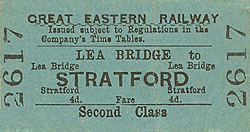 The main station building and booking office was an attractive Italianate style stone and brick structure on the bridge and is thought to be the earliest example of a station having its building on a road bridge. The building was designed by Sancton Wood and featured a bell turret on the roof with a bell that was rung when a train was due. Covered stairways led down to the platforms. The platforms were raised to standard height in March 1881. As the line was at an oblique angle to Lea Bridge Road the two brick waiting open fronted shelters were slightly staggered; they were fitted with plain canopies supported on eleven narrow cast iron columns. A house was provided for the stationmaster immediately west of the station on Lea Bridge Road.
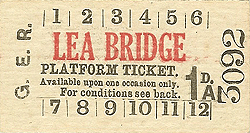
 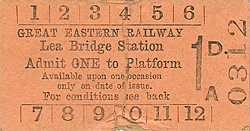 In January 1871 a slip siding was installed at Stratford end of Lea Bridge. This was provided with a signalman's hut for the purpose of signalling when goods trains were in the siding and clear of the main line. Presumably this was hand signalling. In February 1871 the Lea Bridge signalling contract was awarded to Messrs Stevens. It is not clear if this was for new or additional signaling, but probably additional as records contain countless mentions of track alterations and additions around this time. In March 1880 another signalling contract was awarded, this time to Messrs Saxby & Farmer. It is unclear exactly when Lea Bridge signal box was opened but it is shown for the first time on the OS Town Plan surveyed in 1893 so it was probably built by Saxby & Farmer c1880. It was at the north end of the up platform at what was known as Lea Bridge Junction.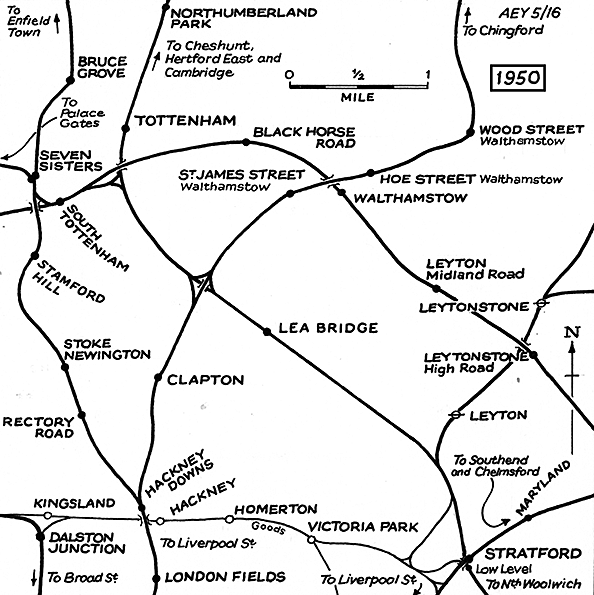
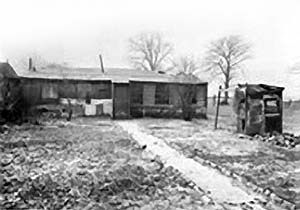 A bungalow ‘shanty town’ (left) grew up in the 1870s around Lea Bridge station, at fringes of the expanding urban area of Leyton. The settlement consisted of perhaps 69 wooden houses or shacks with wells and earth closets. There was a wooden mission church. Residents reared livestock and undertook market gardening. The shanty town was demolished in the 1920s with the area north of the Lea Bridge Road used to create a speedway stadium.
 In the 1920s Lea Bridge was served by two services, Liverpool Street - Hertford with 18 up trains and 16 down trains on Monday-to-Saturday with five trains in each direction on Sunday and Palace Gates - North Woolwich with 16 trains a day in each direction on weekdays but no weekend service. At that time there were Sunday services via the Hall Farm Curve to the Chingford branch. A similar frequency was still in operation on both routes in 1950, slightly reduced on the Hertford service and slightly increased on the North Woolwich service.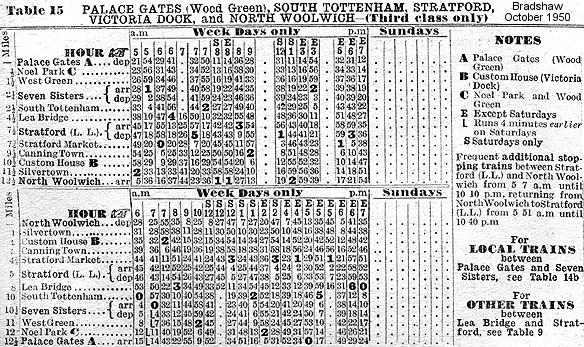
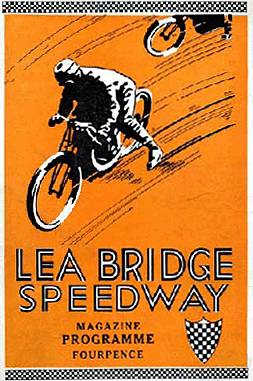 Through the twentieth century rail-served industry was established to the east of the line; this included a cast stone works which was served by four sidings and, on the same site, the H Young & Co Lea Bridge Steel Fabrication Works which was established at Lea Bridge in 1943 after their Nine Elms works was destroyed in a German air raid. The company relocated to Norfolk in 1995.
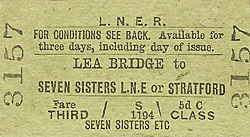 On 31 March 1944 the station building was gutted by fire, although the frontage survived; the building was repaired c1950. At some stage during the LNER era the company’s distinctive ‘mint imperial’ style electric lighting was installed, presumably accompanied by small nameplates. After World War II, in 1948 the railways of the UK were nationalised, and operation of the station passed to British Railways Eastern Region.
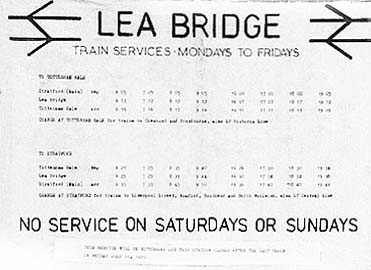
 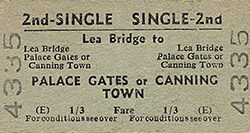 Freight services were withdrawn from Lea Bridge on 7 December 1970 but the goods depot was retained as a parcels depot at least until the mid-1970s The station became an unstaffed halt in 1976.
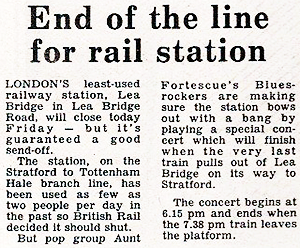
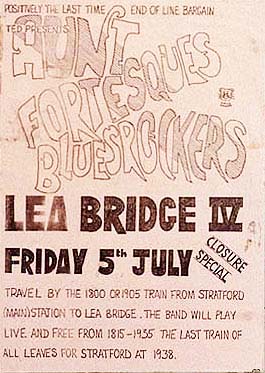 On the last day, a local acoustic punk-folk band Aunt Fortescue's Bluesrockers played a gig at the station and on the final train. They had previously played 'on train' gigs to highlight the station’s plight and bad service and forthcoming closure. On the occasion of the band’s concert in March 1985 the station staff at Stratford were bemused when numerous passengers appeared at the booking office in the early evening requesting return tickets to Lea Bridge. The last train was formed of a two-car Cravens Class 105 DMU. The two-car set had been painted in a non-standard livery for an open day at Stratford depot. Stratford often applied its own version of the BR livery, especially on locomotives. The car numbers of the DMU were 54122 and 53359, originally E56122 and E50359 respectively. Although usually referred to as a Cravens Class 105, the power car, 53359, was actually a Class 106. The difference was Class 105 had AEC engines and Class 106 Leyland engines. The last train, driven by driver Dave Newell, left Lea Bridge in the middle of a violent thunderstorm. At this time the sidings serving the parcels depot was still in place but very rusty and clearly out of use for many years.
 Since closure of the station there have been numerous proposals to reopen it, and in 2002 Waltham Forest Council commissioned a feasibility study for a scheme to reinstate the Hall Farm Curve and reopen Lea Bridge station. The work was funded by a £50,000 grant from Transport for London. The studies showed that the scheme was relatively straightforward in engineering terms and that there were no major technical problems. The scheme would involve laying approximately 800 metres of track on the existing embankment, which is still in good condition. Services could then be run from Chingford in the north of Waltham Forest, via the Hall Farm Curve to a reopened station at Lea Bridge, then Stratford and possibly beyond providing the population of Waltham Forest with an efficient rail connection to the 2012 Olympic site and Lower Lea Valley area.
  In December 2005 a new service between Stratford and Stansted Airport reintroduced direct passenger trains between Stratford and Tottenham Hale passing through the closed Lea Bridge station. The campaign to reopen the station continued as part of a general regeneration of the area before the 2012 Olympics.
  In October 2013 the overgrown platforms were cleared in preparation for construction of the new station building. The new buildings were to be situated on the up side (towards Stratford) rather than on the road bridge over the line, and the platforms were to be linked by a footbridge. Estimates by Transport for London show 352,000 users annually by 2031 with a service of two trains per hour. It was hoped that—after 29 years of closure—the station would reopen in late 2014. Following objections raised by three freight operators who also use the line the construction date slipped, but work started in July 2015; the station opened in spring 2016, with the first trains arriving just after 8.20pm on Sunday 15 May. Construction costs had nearly doubled to over £11m. Waltham Forest Council has provided £5m, with £1·1m from the Department for Transport’s New Stations Fund and £5·5m from developer contributions managed by the Stratford Transport Implementation Group.
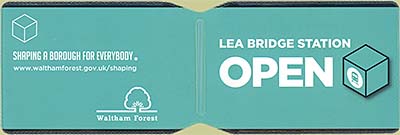
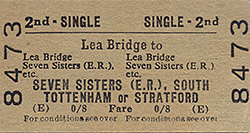 The official opening ceremony took place the following day with a VIP party arriving by train from Tottenham Hale at 10.01. Children from nearby Sybourn Primary School greeted Council Leader Chris Robbins and Rail Minister Claire Perry MP, as they arrived at the station. Speeches were made by Jamie Burles, Managing Director of Abellio Greater Anglia who are providing the new service; Councillor Chris Robbins, leader of Waltham Forest Council; Richard Schofield, Network Rail Route Managing Director, Anglia; Stella Creasey, Labour MP for Walthamstow; and Claire Perry, Parliamentary Under Secretary of State at the Department for Transport. Another invited guest at the ceremony was Dave Newell who was the driver of the last train into Lea Bridge in 1985. Dave is still driving trains and is now one of Chiltern Railways’ most respected drivers.
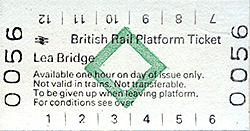
 Also there to entertain the invited guests and onlookers were Aunt Fortescue's Bluesrockers, who having played on the station on the last day in 1985, reformed specially for the reopening 31 years later. Lead singer Graham Larkbey (a doughty campaigner for improved railway services in London and prolific photographer of railway stations) was also aboard the first train to entertain the passengers the previous day.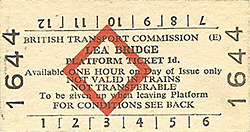
bridge_aerial_old13.jpg)
bridge105.jpg)
thumb113.jpg)
thumb111.jpg)
bridge_thumb15.jpg)
bridge_thumb16.jpg)
bridge_thumb80.jpg)
bridge_thumb82.jpg)
bridge_old_thumb3.jpg)
bridge_old_thumb4.jpg)
bridge_thumb47.jpg)
bridge_thumb48.jpg)
bridge_thumb46.jpg)
bridge_thumb49.jpg)
bridge_thumb51.jpg)
bridge_thumb50.jpg)
bridge_thumb52.jpg)
thumb18.jpg)
bridge_thumb44.jpg)
thumb17.jpg)
thumb21.jpg)
bridge_thumb106.jpg)
bridge_thumb83.jpg)
bridge_thumb85.jpg)
bridge_thumb86.jpg)
bridge_thumb88.jpg)
bridge_thumb92.jpg)
bridge_thumb93.jpg)
bridge_thumb94.jpg)
bridge_thumb95.jpg)
bridge_thumb98.jpg)
bridge_thumb99.jpg)
bridge_thumb39.jpg)
bridge_thumb79.jpg)
bridge_thumb57.jpg)
bridge_thumb59.jpg)
bridge_thumb61.jpg)
bridge_thumb66.jpg)
bridge_thumb67.jpg)
bridge_thumb69.jpg)
bridge_thumb70.jpg)
 Home Page