
Station Name: SEVERN BRIDGE[Source: Nick Catford]
Severn Bridge Station Gallery 1: c1905 - October 1960
bridge1.jpg) Looking south east towards Severn Bridge station and the Severn bridge from an elevated position c1905.
Photo from John Alsop collection 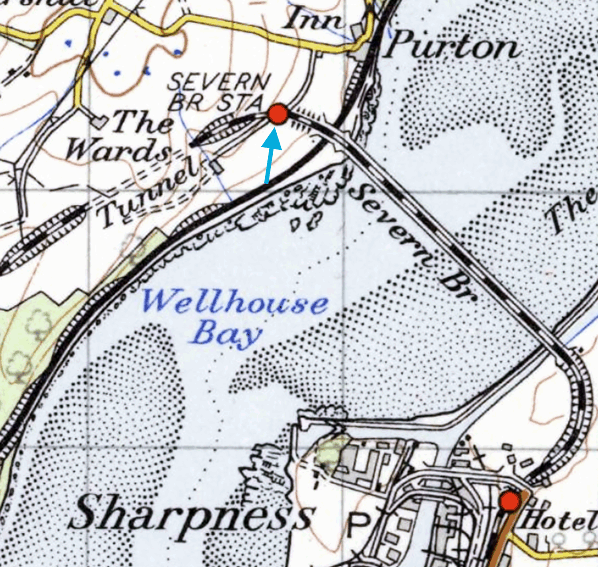 
1886 1:2,500 OS map shows the layout of the station as opened in 1879. The platform buildings and signal box to the west of the station are seen and be seen on the up side a smaller shelter stands on the down platform. A goods siding is seen on the up side top the east of the station. Steps up to the down platform are seen on the south side to the east of the station.
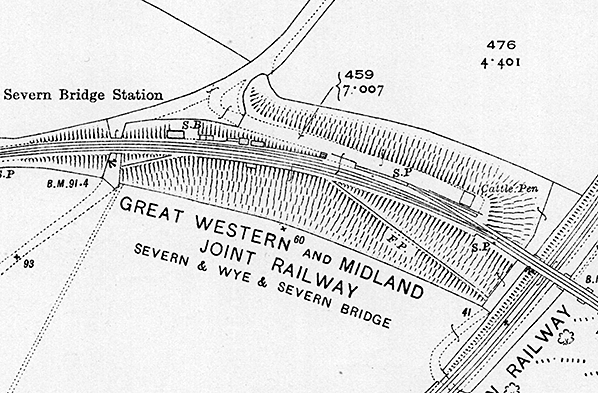
1922 1:2,500 OS map shows a few changes. A cattle pen is now shown at the end of the siding and the steps to the down platform have been replaced by a footpath running diagonally up the embankment.
 1972 1:2,500 OS map. Track has been lifted and station buildings have been demolished except the signal box..
bridge2.jpg)
Another view looking south east across the River Severn c1905.
Photo from John Alsop collection bridge3.jpg) Looking north west towards Severn Bridge station c1950s. The end of the single siding is seen on the right. The siding closed 4 March 1957, three years before the station closed to passengers.
Photo from John Mann collection bridge4.jpg) Looking south east from Severn Bridge station towards the bridge in the1950s. Note the LMS Hawkseye running in board stating Severn Bridge For Blakeney. The village of Blakeney which the station served was two miles away along poor roads and it's unlikely that station ever had much traffic from the village.
Photo from John Mann collection 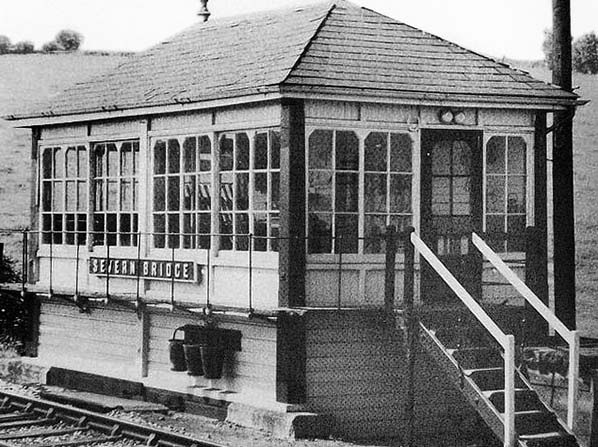 Severn Bridge signal box c1950s.
Photo from John Mann collection 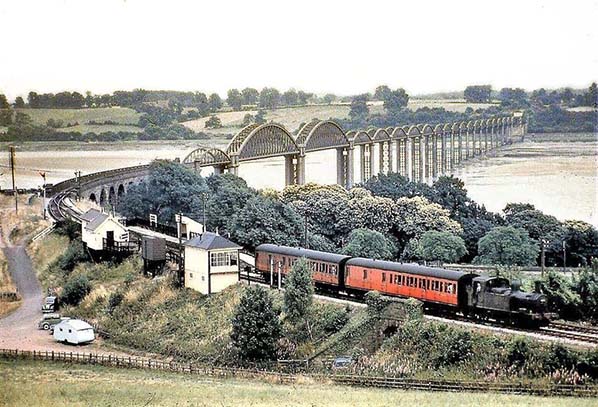
Looking south across the River Severn in July 1959, 14XX Class 0-4-2 1426 heads south west towards Lydney having called at Severn Bridge station. The GWR 1400 Class was designed by Charles Collett to be used as a lightweight locomotive on branch line passenger duties. They were an advancement of the earlier 517 class and were originally numbered as 48xx. Some were converted to oil firing and kept the same numbering, with the unmodified locomotives changing to the 14xx designation. The 14xx locos were designed to work with the GWR's specialist 'autocoach' which enabled push-pull working and the class proved to be highly successful on these workings. 1426 was built in November 1933 and withdrawn from Gloucester LMS shed in April 1962.
Photo
from Jim Lake collection
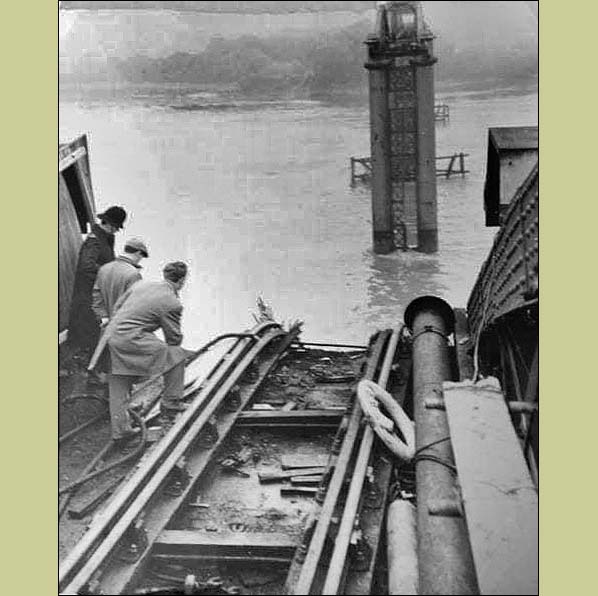
Examining the damage to the bridge shortly after the accident
Photo by Andy Fuge Click here for Severn Bridge Station Gallery 2: c1962 - 27 June 1937
|
 The Severn Bridge Railway linked Lydney Junction station on the north bank of the River Severn with Sharpness Docks on the south bank via the Severn Railway Bridge. The railway joined up with the Sharpness Branch Line at Sharpness; this had been built from Berkeley Road station on the Bristol and Gloucester Railway to the docks in 1875. The opening
 In 1966 two brakvan railtours visited the station. Both tours were called The Severn Boar and were organised by the Railway Enthusiasts club. The first took place on 6th June and was hauled by two pannier tanks 16?? and 1664. Half way through the day the first tank was running hot and 1664 handled the train single-handed from then on. The tour left Gloucester Central at 09.55 and ran via Cinderford, Whimsey, Coleford and Lydney Junction to Severn Bridge station from where it returned to Lydney Junction and Gloucester Central arriving at 19.00. The tour brochure advertised a re-run of the tour on 20 June for those who couldn't be accommodated on the first date.
 Home Page