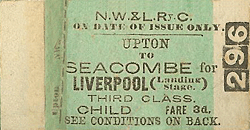
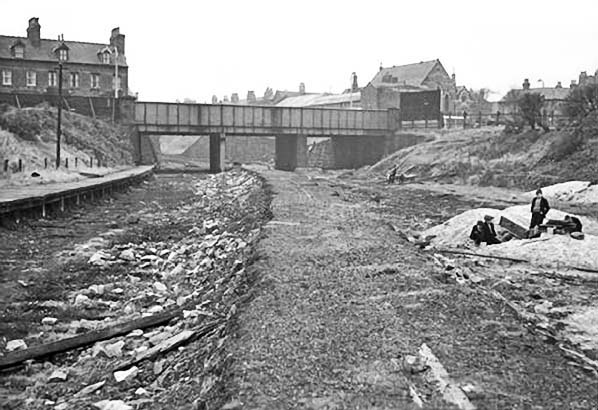
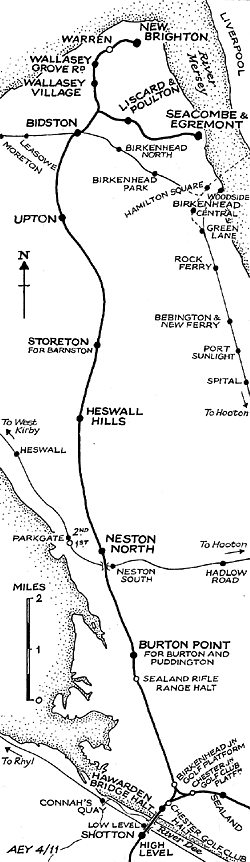
Notes: The line on which the terminal station of Seacombe stood was the last addition to the Wirral Railway Company's (WR) network of lines that stretched from Birkenhead to West Kirby and to New Brighton. The branch to Seacombe left the New Brighton branch at Seacombe Junction from where heavy engineering was required to drive the line through a sandstone ridge and through to the banks of the Mersey at Seacombe. There was only one other station on the line at Liscard & Poulton.
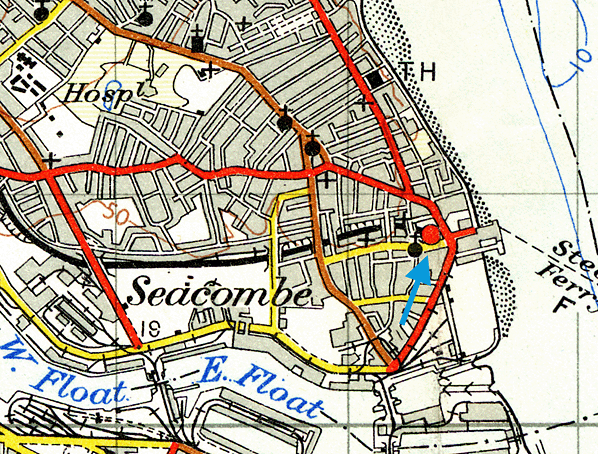
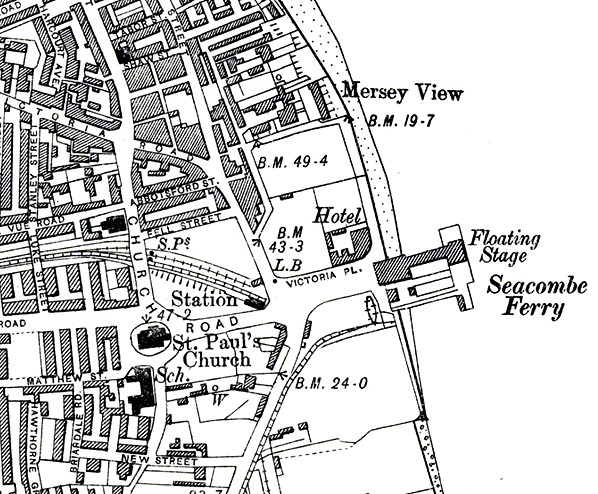
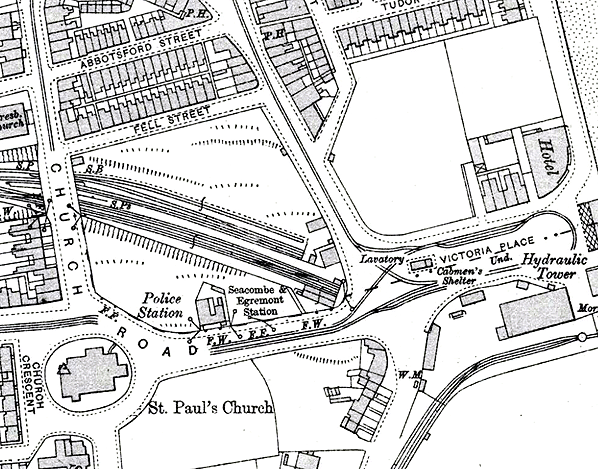
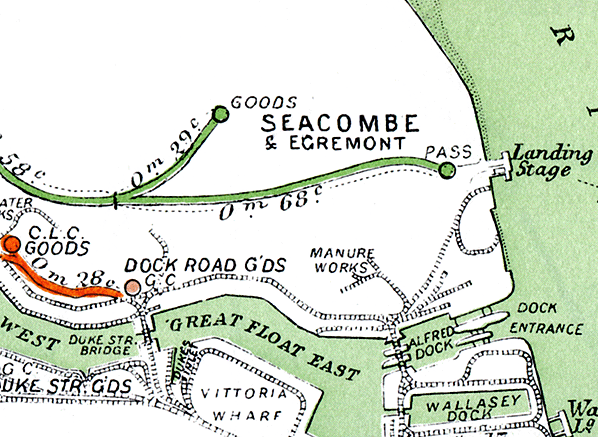
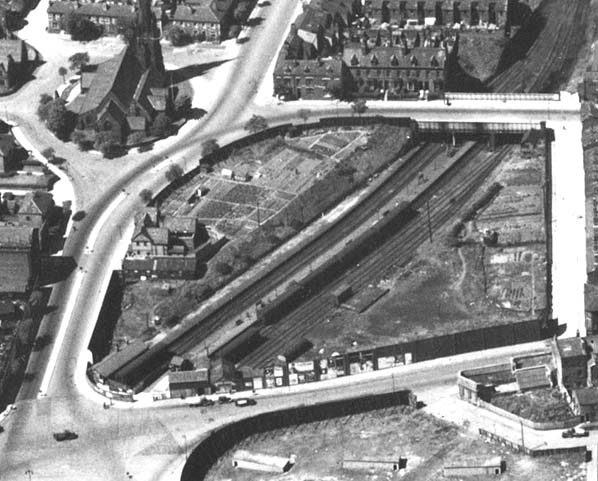
 The station opened on 1 June 1895 and was located on the north side of Church Road, to the west of Borough Road close to the Seacombe Ferry terminal which offered good connections to Liverpool. Church Road curved around to the north and passed over the line at the stations western end by means of a large single span iron bridge. At the time of opening the station was provided with two timber built platforms that provided three platform faces. The southernmost platform which was adjacent to Church Road had a single platform face and the northernmost was an island platform. The station was accessed from Borough Road on which stood a single storey timber built building at the eastern end of the southernmost platform. The station opened on 1 June 1895 and was located on the north side of Church Road, to the west of Borough Road close to the Seacombe Ferry terminal which offered good connections to Liverpool. Church Road curved around to the north and passed over the line at the stations western end by means of a large single span iron bridge. At the time of opening the station was provided with two timber built platforms that provided three platform faces. The southernmost platform which was adjacent to Church Road had a single platform face and the northernmost was an island platform. The station was accessed from Borough Road on which stood a single storey timber built building at the eastern end of the southernmost platform.
A signalbox located on the north side of the line at the west end of the station, adjacent to the Church Road bridge, controlled train movements.
The reason why the station was timber built and very basic was because the WR intended to build a more substantial station adjacent to the actual ferry terminal. The idea was never realised and Seacombe station was to remain much the same throughout its life.
At the time of opening the station was served by trains that ran to West Kirby. Nineteen trains per day ran in each direction on weekdays at half hourly intervals with nine on Sundays. Passenger numbers were high with over 2000 being carried over the first weekend of operation (click here to see train services in December 1895).
From 1897 the WR introduced a train service to New Brighton which was known locally as the ‘Seacombe Dodger’ but was never really very successful as it took a somewhat indirect route to the resort which lies only a few miles to the north of Seacombe by road. In 1899 it ran only during the afternoons and evenings and it was designed to cater for tourists travelling from Liverpool on the Ferry. Competition from the Wallasey Borough tramways from 1902 did not help. The service survived until 1910.
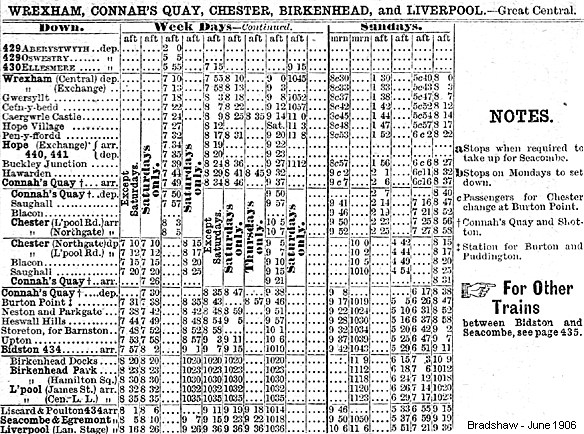
On 1 May 1898 train services of the Wrexham, Mold & Connahs Quay Railway (WM&CQR) that linked Wrexham to Bidston were with the agreement of the WR extended to run through to Seacombe. By this date the WM&CQR had effectively become part of the Great Central Railway (GCR) but the situation was not formalised until 1904. The Wrexham trains proved very popular with Liverpool residents who used them to enjoy a day out in the Country.
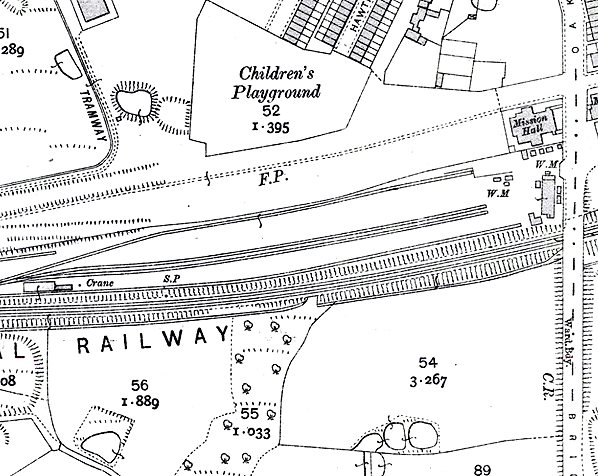
Seacombe goods yard was half a mile west of the passenger station on the west side of Oakdale Road. It comprised 5 sidings on the north side of the line, one serving a cattle dock and pens. There was also a 5-ton crane and two weigh bridges.
On 1 July 1901 Seacombe Station was renamed as Seacombe & Egremont.
The 1904 Handbook of Stations listed Seacombe & Egremont as being able to handle passengers, general goods, parcels, furniture vans, livestock, horse boxes and funiture vans. The goods yard at had a 5-ton lifting crane. In 1904 private sidings also served the Seacombe Pressed Brick and Tile Works, Wallasey Urban District Council gas works and the English McKenna Process Company.
By 1906 there were 13 GCR departures on weekdays from Seacombe between 7:50am and 8:55pm. Five of the departures went to Chester Northgate, one to Buckley Junction with the remainder serving Wrexham. The WR ran 16 trains on weekdays from Seacombe to West Kirby in 1906.
The July 1922 timetable showed 25 Monday-to-Friday departures. On Saturdays there were 24 departures and on Sundays 8 (click here to see the 1922 train service).
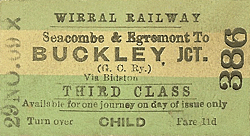 In 1923 Seacombe & Egremont Station became part of the London Midland & Scottish Railway (LMS) and the former GCR train service became part of the London North Eastern Railway (LNER). By 1929 the LMS had reduced the Seacombe to West Kirby service to one train per hour in each direction but the LNER continued to offer an extensive service to Chester Northgate and Wrexham. In 1923 Seacombe & Egremont Station became part of the London Midland & Scottish Railway (LMS) and the former GCR train service became part of the London North Eastern Railway (LNER). By 1929 the LMS had reduced the Seacombe to West Kirby service to one train per hour in each direction but the LNER continued to offer an extensive service to Chester Northgate and Wrexham.
In the early 1930s the LMS drew up plans for the electrification of the former WR lines between Birkenhead Park, West Kirby and New Brighton. The Seacombe Branch was not considered. In 1938 the electrification was complete and it allowed passengers to travel direct between Liverpool and West Kirby as there was an end on connection between the LMS and the under river Mersey Railway at Birkenhead Park. This made travelling by Ferry to Seacombe to connect to a West Kirby train far less attractive. Passengers could also travel from Liverpool to Bidston by train and connect directly into the LNER service. Seacombe & Egremont station suffered as a result and the West Kirby service was withdrawn on 12 March 1938.
During the early years of the Second World War Seacombe & Egremont station was used to evacuate thousands of local Children to the safety of the Countryside.
On 1 January 1948 Seacombe & Egremont station became part of the nationalised British Railways [London Midland Region] (BR[LMR]). The BR[LMR] summer timetable showed 11 departures Monday-to-Friday. On Saturdays there were an extra 2 departures. On Sundays there was a service of 3 trains in each direction (click here to see the 1948 train service).
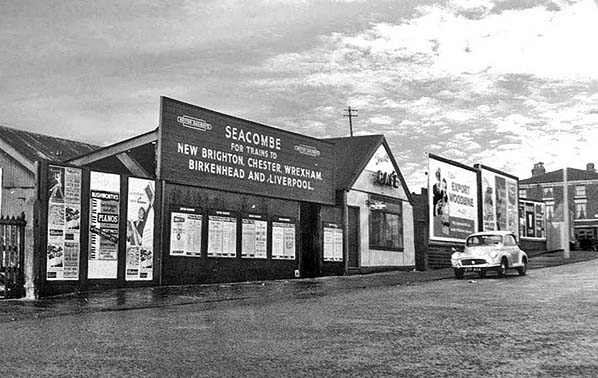
Fom 5 January 1953 the station reverted to being simply Seacombe. During the early years of the 1950s the island platform was reconstructed using concrete sections backfilled with gravel. A new entrance was provided which led directly onto the platform and the southernmost platform was taken out of use. In the late 1950s thirteen trains ran from Seacombe to either Wrexham or Chester on weekdays with only three trains on a Sunday running to Wrexham only. In 1959 BR[LMR] decided to close Seacombe and Liscard & Poulton stations and divert the Wrexham and Chester trains to New Brighton.
The last service left Seacombe for Wrexham on Sunday the 3rd January 1960 and the station closed to passenger services. The line lingered on for a few more years as a goods line but the last services ran in June 1963.
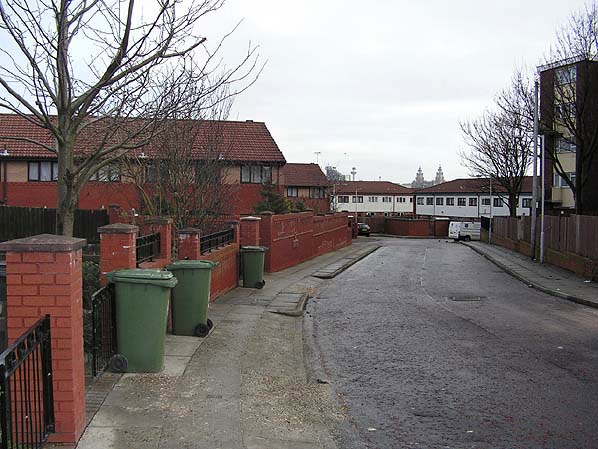
After closure much of the alignment of the Seacombe branch was used to form the Kingsway Road Tunnel that opened in 1971 but the station site itself was used for a housing development. Only a small section of sandstone wall remained in 2018.
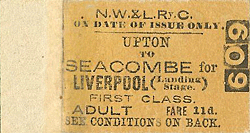
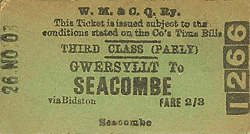
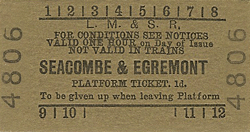
Ticket from Michael Stewart, Bradshaw from Nick Catford, route map drawn by Alan Young
Sources:
See also Liscard & Poulton
To see other stations on the Wrexham Central to Bidston Line click
Wrexham Central, Wrexham Exchange, Rhosddu, Hope High Level, Buckley (1st station), Chester Golf Club Halt, Birkenhead Junction Golf Club Platform, Sealand Rifle Range Halt, Burton Point, Storeton,
See also MS&LR Stations between Shotton and Chester Northgate
Chester Junction Golf Club Platform, Sealand, Saughall, Blacon, Chester Liverpool Road, Chester Northgate
See also related items
The Buckley Railway
Hawarden Loop
Hawarden Bridge
Railways at Bidston |

old4.jpg)
old5.jpg)
.jpg)
 Home Page