|
Notes: Pier Head Station was located on the Liverpool Overhead Railway (LOR) which in its completed form ran from Dingle in the south of the city to the Lancashire & Yorkshire Railway’s (LYR) Seaforth & Litherland station in the north.
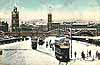
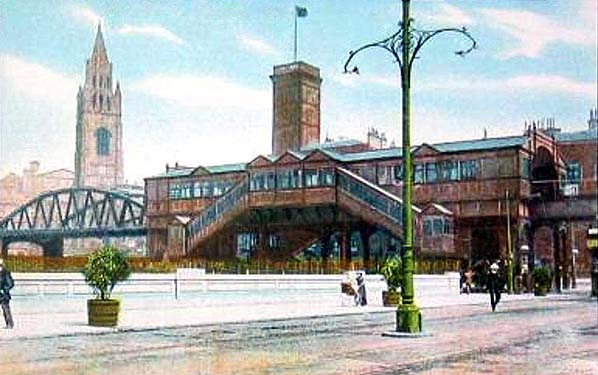
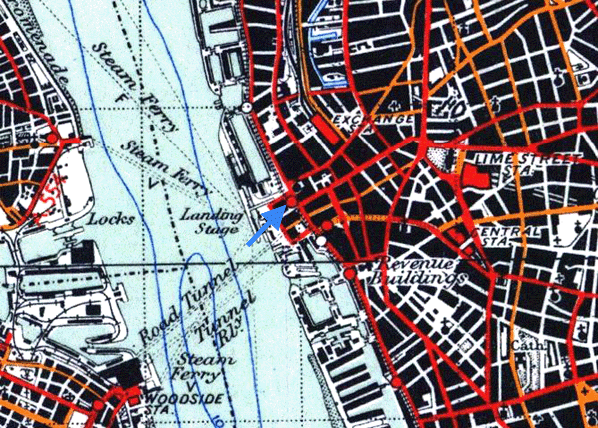
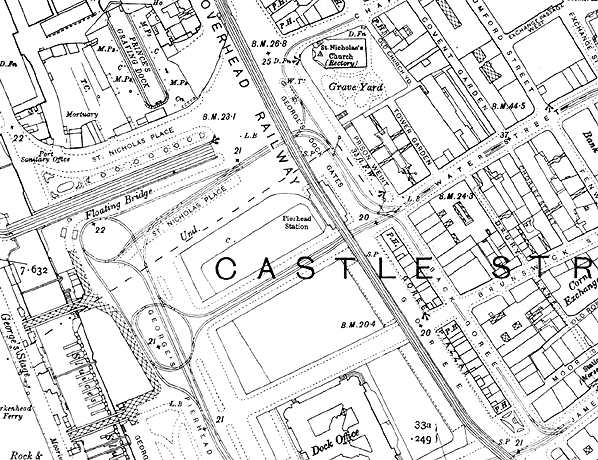
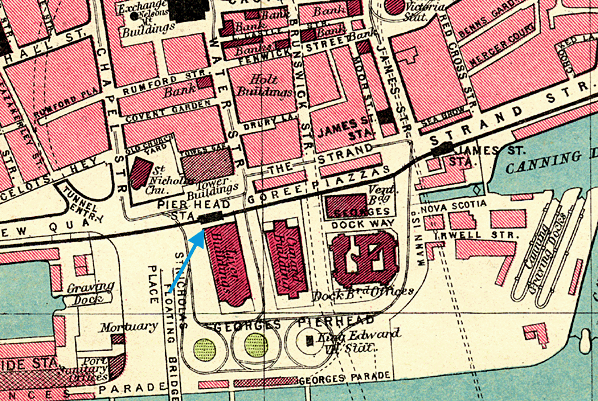
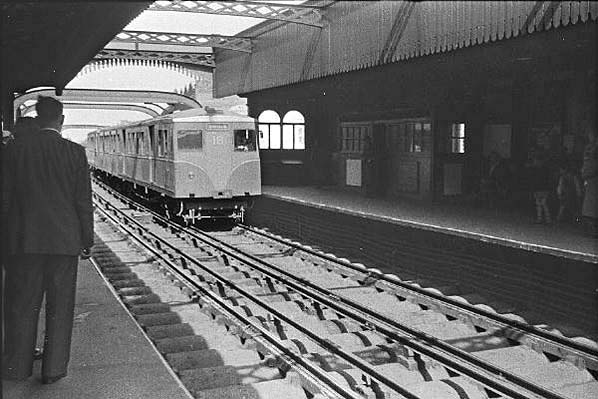
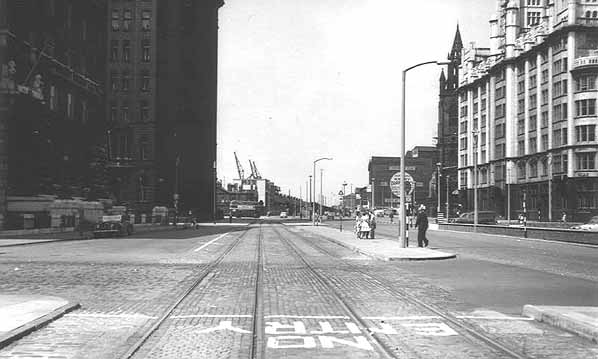
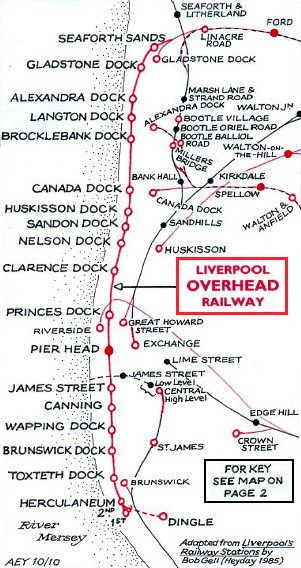 Pier Head station was the LOR’s busiest station and it opened with the first section of the line on the 4 February 1893. The station was adjacent to the Liverpool’s waterfront ferry and passenger liner terminals that were the Pier Head. The area was a hub for public transport as the cities tramways also had a terminal at the Pier Head and the underground Mersey Railway (MR) James Street Station was located close by. Pier Head station was the LOR’s busiest station and it opened with the first section of the line on the 4 February 1893. The station was adjacent to the Liverpool’s waterfront ferry and passenger liner terminals that were the Pier Head. The area was a hub for public transport as the cities tramways also had a terminal at the Pier Head and the underground Mersey Railway (MR) James Street Station was located close by.
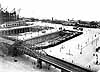
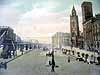
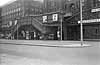
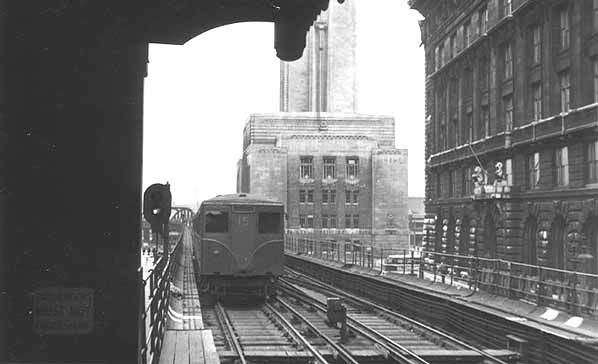
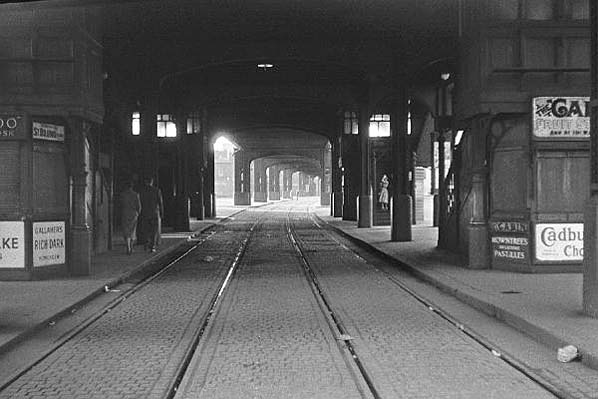
The station was a typical LOR structure being located on the elevated line 16 feet above streetlevel on an iron structure that carried the line above Liverpool’s busy Dock Road. Directly below Pier Head station was the Dock Board goods railway which ran throughout the length of the dock system beneath the LOR linking the various goods facilities. The line was double track and Pier Head was provided with two platforms that were reached by stairs that led up from street level. Two sets of stairs that met in the middle of the platform were located on each side of the line. Underneath the stairs on the east side of the line there were stalls that sold magazines and tobacco products. Only a couple of Overhead stations had platform canopies and Pier Head was one of them. This was most probably because the station was situated right in the heart of Liverpool’s commercial district and seen as one of the most important on the line. Unlike other Overhead Stations the ticket facilities were at street level.
The LOR was an electric railway from the very start. Pier Head station opened with the line on the 4 February 1893 and was served by frequent trains that ran between Herculaneum Dock and Alexandra Dock calling at all stations. From the 30 April 1894 north bound services started running to Seaforth Sands when the line was extended.
From the 21 December 1896 passengers from Pier Head station were able to travel to Dingle when a new underground terminus was opened at the southern end of the line. On 2 July 1905 a connection opened to the LYR network at the northern end of the LOR and trains began to operate to Seaforth & Litherland station where connections direct connections with the Liverpool Exchange and Southport Chapel Street service could be made. The LYR introduced through trains between Southport and Dingle on 2 February 1906, which called at Pier Head. Special lightweight electric units were constructed by the LYR for the service. By the summer of 1906 there were hourly trains in each direction. In the same year the LYR also introduced a service between Aintree and Dingle which used the North Mersey Branch of the LYR.
The Aintree service was not a success and it was withdrawn in 1908. Specials continued to run between Dingle and Aintree, calling at Pier Head, for the Jump Sunday and the Grand National horse races.
In 1911 the world famous Royal Liver Building opened on the west side of Pier Head station bringing even more business.
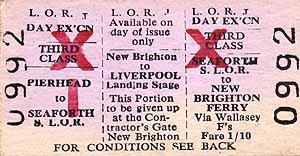
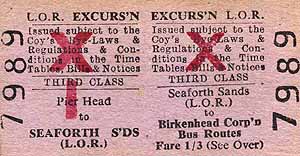 By this time the LOR was carrying millions of passengers every year and a high proportion of them used Pier Head. The line was used by dock labourers, sailors, shoppers, businessmen and also tourists. The LOR soon recognised that the commanding views from their trains of the dock estate and the ships within it were an attraction; they therefore provided day tickets allowing passengers to board and alight from trains at any of the stations along the line, with unlimited travel. Locally the line became known as the ‘Ovee’ or the ‘Dockers’ Umbrella’. The later name referred to the fact that dockers would walk under its structure in inclement weather to shelter from the rain. By this time the LOR was carrying millions of passengers every year and a high proportion of them used Pier Head. The line was used by dock labourers, sailors, shoppers, businessmen and also tourists. The LOR soon recognised that the commanding views from their trains of the dock estate and the ships within it were an attraction; they therefore provided day tickets allowing passengers to board and alight from trains at any of the stations along the line, with unlimited travel. Locally the line became known as the ‘Ovee’ or the ‘Dockers’ Umbrella’. The later name referred to the fact that dockers would walk under its structure in inclement weather to shelter from the rain.
The hourly LYR service between Southport and Dingle was withdrawn in August 1914. It was not generating the receipts that the LYR had hoped for. Passengers could still travel between Southport and Pier Head on through tickets but a change of train at Seaforth & Litherland was required. With high-frequency services on both the LOR and the LYR lines a change of trains was no impediment to travel.
During the Great War the LOR performed a vital role as Liverpool was the major westward facing seaport.
By the 1920s millions of passengers every year were using the LOR. From the start the LOR had realised the tourist potential of the line as it had excellent views of the docks and the waterfront. Posters advertised the scenic aspect of the line and special tickets were issued allowing a day’s unlimited travel for a fixed price.
The outbreak of the Second World War on 3 September 1939 resulted in the last Aintree race meeting being held in the spring of 1940. Between December 1940 and January 1942 Liverpool was bombed by the German Luftwaffe, the worst period being between December 1940 and May 1941. The LOR received a number of direct hits but, being vital to the smooth running of the docks, it was patched up and services were restored as quickly as possible. Although the nearby James Street station was very badly damaged Pier Head escaped relatively unscathed.
After the war there was a boom in trade coming through the Liverpool Docks, and the LOR was busier than ever. Aintree race day services resumed on 29 March 1947, the Grand National having been moved from a Friday to a Saturday.
On 1 January 1948 most of the railways of Great Britain were nationalised, but the LOR remained independent.
For the Grand National on 26 March 1955 the LOR ran nine trains from Pier Head to Aintree Sefton Arms all of which originated at Dingle; there were seven return workings which ran on to Dingle.
 For most its length the LOR ran directly above the Mersey Docks & Harbour Board railway which had been steam-worked from the late nineteenth century; it was originally worked by horses. In 1955 an engineering inspection of the LOR structure showed that extensive damage had occurred over the years and in places it was seriously corroded. Despite having a healthy revenue the LOR did not have the finance to undertake the repairs. There was much discussion, including talks with the city council about a municipal takeover, but nothing could be agreed. For most its length the LOR ran directly above the Mersey Docks & Harbour Board railway which had been steam-worked from the late nineteenth century; it was originally worked by horses. In 1955 an engineering inspection of the LOR structure showed that extensive damage had occurred over the years and in places it was seriously corroded. Despite having a healthy revenue the LOR did not have the finance to undertake the repairs. There was much discussion, including talks with the city council about a municipal takeover, but nothing could be agreed.
As no rescue package could be agreed the LOR decided upon complete closure and, despite a great deal of local protest, the last trains ran on 30 December 1956 and Pier Head closed completely on Monday 31 December 1956. That day a staff train was run from Dingle to Seaforth Sands; a further service departed in the afternoon. Over the coming weeks trains were transferred from the southern end of the line to Seaforth Sands. On 23 September 1957 demolition began, and the overhead structure was taken down; the process was complete by January 1958.
Click here for a brief history of the Liverpool Overhead Railway
Click here to see a selection of photos of the LOR by D J Norton
Tickets by Michael Stewart, except 4989 Nick Catford, Bradshaw by Nick Catford and route map drawn by Alan Young.
Sources:
- Disused Stations - Lost Termini of North West England , P T Wright, Silver Link Publishing, 2010.
- Lost Lines - Liverpool and the Mersey , by N Welbourne, Ian Allan, 2008.
- Seventeen Stations to Dingle , John W Gahan, Countryvise Ltd, 1982.
- The Dockers Umbrella , by P Bolger, The Bluecoat Press, 1994.
- The research notes of Tony Graham taken from the National Archives.
To see the other
stations on the Liverpool Overhead Railway
click on the station
name:
Dingle, Herculaneum Dock (1st), Herculaneum Dock 2nd, Toxteth Dock, Brunswick Dock, Wapping Dock, Canning, James
Street, Princes Dock, Clarence Dock, Nelson Dock, Sandon
Dock, Huskisson
Dock, Canada
Dock, Brocklebank
Dock, Langton
Dock, Alexandra
Dock, Gladstone
Dock & Seaforth
Sands
|

 Home Page